Most habit trackers die in the second week, usually because the sheet asked too much: twelve vague habits on a page tucked inside a notebook. A tracker works when ticking it is easier than skipping it.
This guide shows you how to set one up so it survives a busy month. Everything here works with a free printable, and a spreadsheet works the same way.
What you’ll need
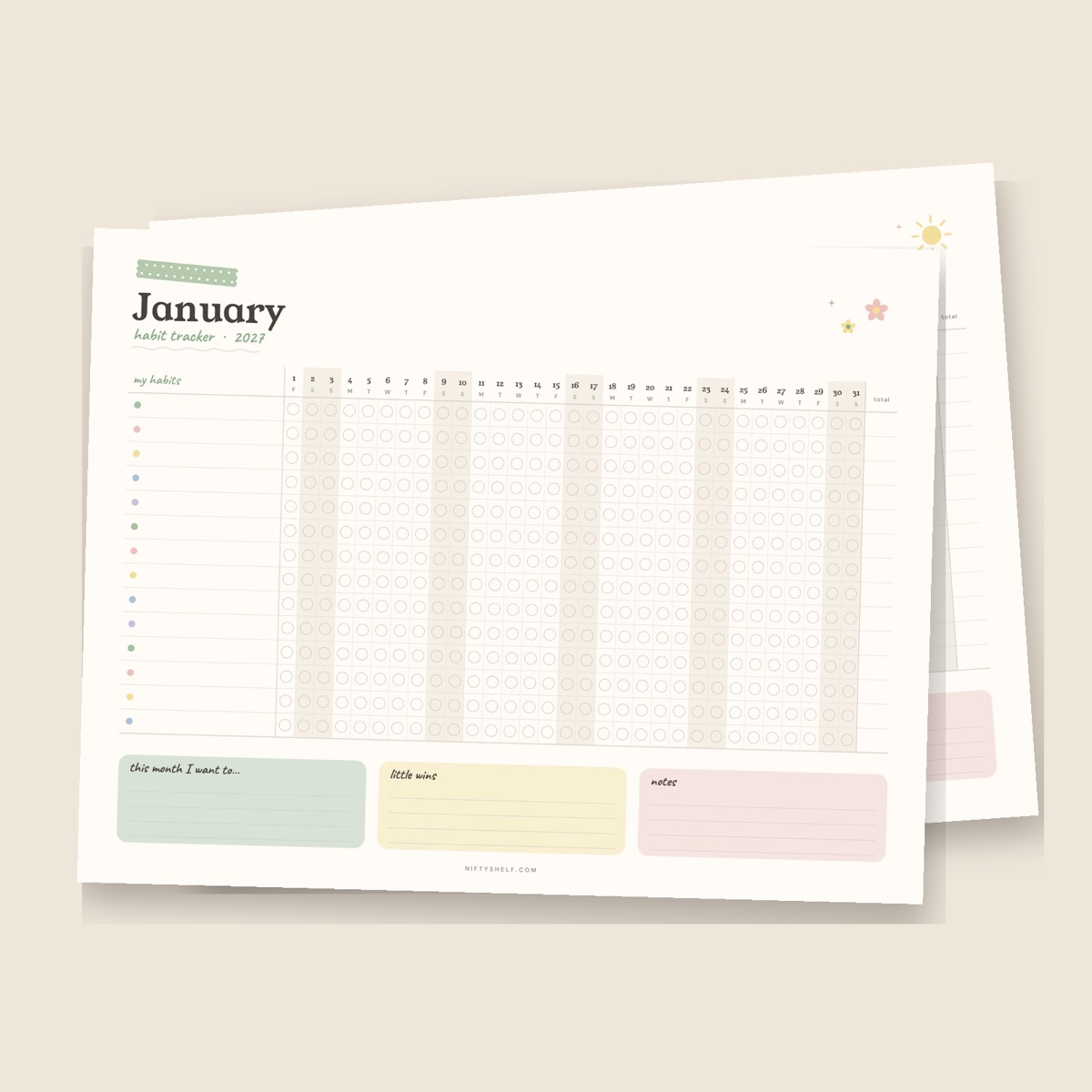
- One tracker sheet. Good starting points are the Weekly Habit Tracker (one page, a “/7” score column and a short weekly review) and the Habit Club Monthly Tracker (31 days, undated, 16 color-coded rows). You can browse more under habit trackers.
- A pen that lives next to the sheet.
- Tape, a magnet or a clipboard.
- Ten minutes once a week.
1. Pick one to three habits, not ten
The 16 rows on a monthly tracker are an invitation, not a target. Start with one habit if you have never tracked before, and three at most. Each extra habit adds a little friction to every single day, and friction is what ends trackers.
A useful filter: pick habits that happen at most once a day and that you can do at home in under ten minutes on a bad day. “Go to the gym” fails the second test on a rainy Tuesday; “do 10 squats” doesn’t.
Got more ideas? Run them one at a time: track one for a month, then add the next.
2. Make each habit tiny and specific
A habit on your tracker should be so clear that you never have to decide whether today counts. Write the row label as an action with a number or a trigger.
| Vague (hard to tick) | Specific (easy to tick) |
|---|---|
| Exercise more | 10 squats after brushing teeth |
| Read | Read 2 pages before bed |
| Drink water | Glass of water with each meal |
| Meditate | Sit for 2 minutes after coffee |
| Be on phone less | Phone charges in the kitchen at 10 pm |
| Study Spanish | 1 lesson before lunch |
The “after X” part matters most. Tying the habit to something you already do every day (brushing teeth, making coffee, getting home) gives it a fixed moment, so you aren’t relying on remembering.
Keep the tiny version as your minimum, not your limit. If you read twenty pages, great, but two pages still earns the tick. For two-minute habits, a countdown in the Online Stopwatch & Timer helps: the alarm beeps and the tab title flashes when time is up, so you can stop watching the clock.
3. Put the sheet where your habit happens
A tracker in a drawer is a tracker you forget. Tape it where the habit takes place or where you pass every evening:
- Water or vitamins: on the fridge or the kitchen cabinet
- Morning stretch: on the bathroom mirror or the closet door
- Reading: on the bedside table, under the book
- Study or work habits: on the wall above your desk
Leave the pen tied to it or clipped on. If ticking takes a walk to find a pen, you will tick “later”, and later becomes never.
Before printing, you can type your habit names straight onto the PDF with Edit PDF, which keeps the rows neat and readable from across the room. If you use the 2027 Monthly Habit Tracker, which has twelve dated months plus an undated page, pull out just the month you need with Split PDF instead of printing all 13 pages.
4. Tick at the same moment every day
Choose one fixed tick moment, ideally the last thing before bed or right after dinner. Tick for the whole day at once: a check for done, a dot or dash for skipped, and leave a box blank only for days that haven’t happened yet. A dash is honest information; a blank box hides it.
Here is what a realistic first week looks like on a weekly sheet:
| Habit | Mon | Tue | Wed | Thu | Fri | Sat | Sun | /7 |
|---|---|---|---|---|---|---|---|---|
| 10 squats after brushing teeth | ✓ | ✓ | ✓ | – | ✓ | ✓ | ✓ | 6 |
| Read 2 pages before bed | ✓ | ✓ | – | ✓ | – | ✓ | ✓ | 5 |
| Phone in kitchen at 10 pm | – | ✓ | ✓ | – | – | ✓ | – | 3 |
Nothing here is perfect, and that’s fine. The squats are settled, reading wobbles on busy days, and the phone rule is clearly too hard as written. That’s what the weekly review is for.
5. Follow the “never miss twice” rule
One missed day is noise. Two in a row is the start of a new habit: not doing it. So the only streak rule that really matters is never missing twice in a row.
On the day after a miss, shrink the habit to its smallest possible form and do that. One squat. One page. One sip from a full glass. It feels silly, but the point is to keep the chain of “I’m someone who does this” going, not to get a workout in.
6. Do a 10-minute weekly review
Pick a fixed slot, such as Sunday evening, and look at the week’s sheet with these questions. The Weekly Habit Tracker has space for the answers at the bottom of the page.
- Which habit got the most ticks, and what made it easy?
- Which one got the fewest, and what was happening on the missed days?
- Is the problem the habit, the trigger or the timing?
- What is one change for next week? (Smaller, earlier, a different trigger or a new spot for the sheet.)
- How was my energy this week, and did it affect the ticks?
- Should any habit be retired because it’s now automatic, or because I don’t care about it any more?
For the phone habit above, the fix might be: “10 pm is too late, I’m already in bed. Move it to 9:30.” One small change per week is plenty.
If you want a number, the Percentage Calculator turns a monthly count into a rate: 22 ticks out of 30 days is about 73%. A rate is kinder than a streak, because one bad day barely moves it.
7. Recover from a broken streak without starting over
At some point you’ll lose a week to illness, travel or a deadline. When that happens:
- Don’t throw the sheet away or start a new one mid-month. Leave the dashes where they are and resume ticking today.
- Restart with the tiny version for three days before going back to your normal amount.
- Judge the whole month. Twenty ticks and a gap beat a sheet abandoned on day 9.
- Ask what broke it. If it was travel, plan a travel version next time (squats in the hotel room instead of the gym).
8. Switch trackers monthly and use challenge sheets
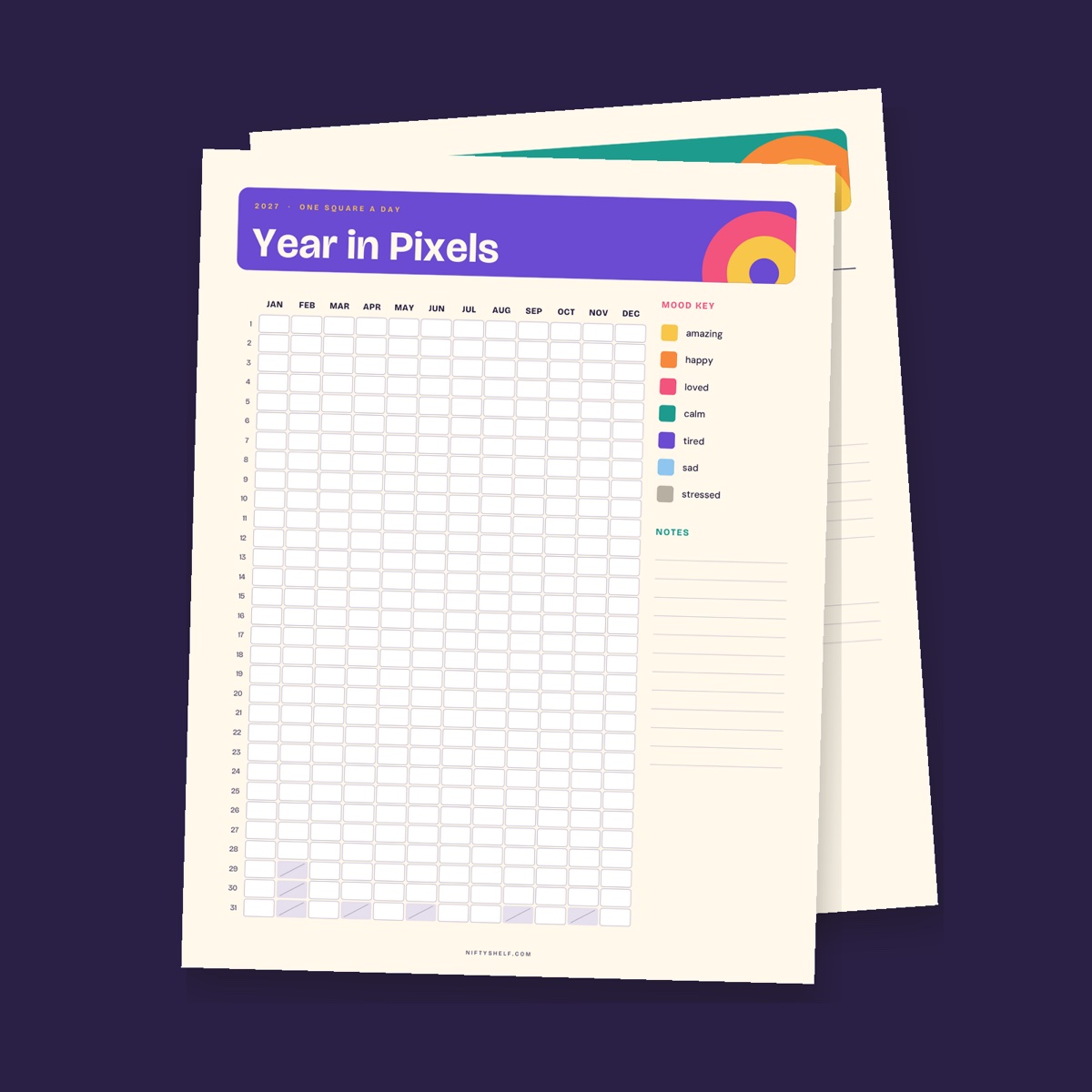
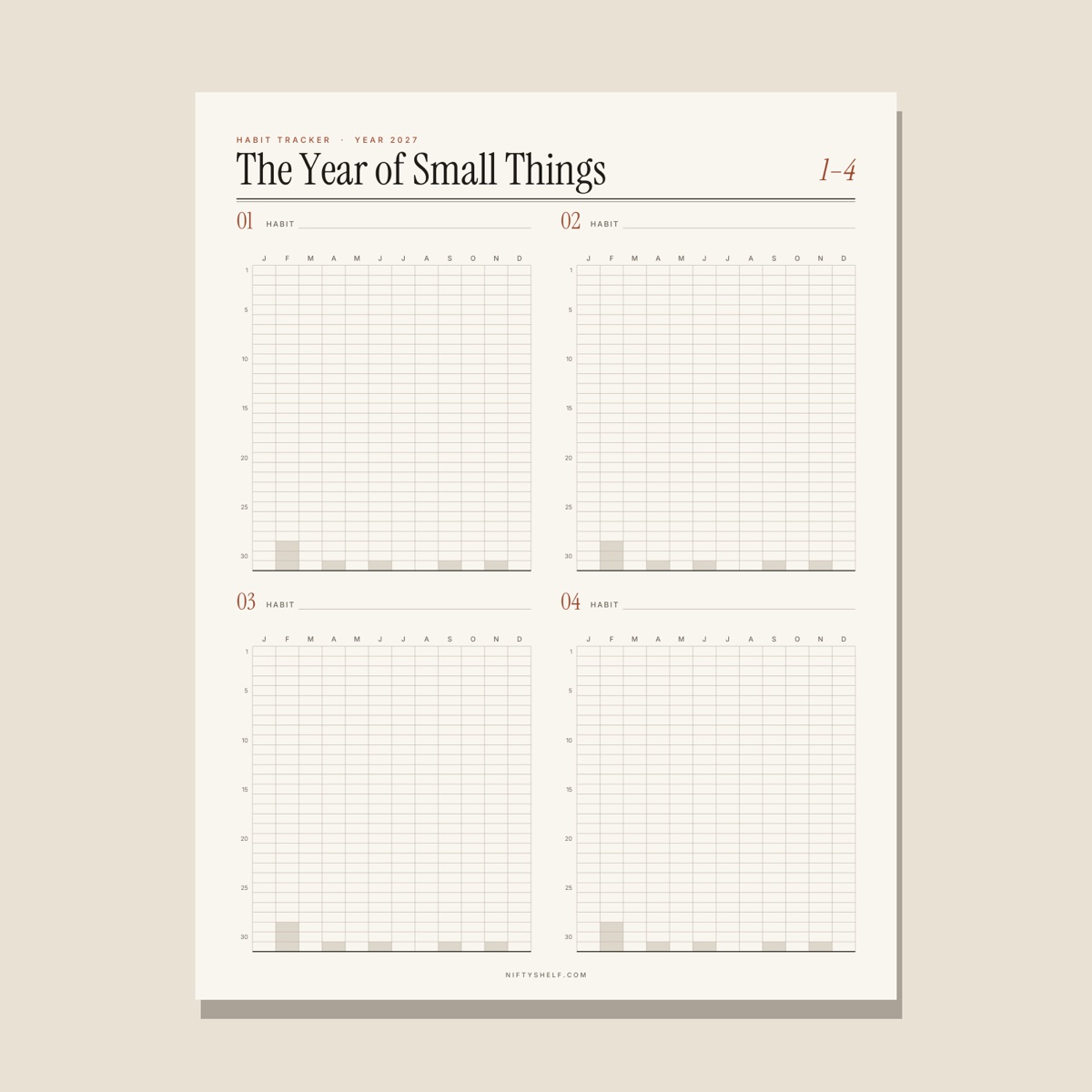
A new sheet each month is a natural reset: decide what carries over, what retires and whether one new habit joins. A fresh design also keeps the page from fading into the wall. You could alternate between the bold Habit Club Monthly Tracker and the calmer 2027 monthly pages, or color one square a day on the 2027 Year in Pixels, which has a page for moods and a page for a single habit.
For goals with a clear finish line, a challenge tracker gives you a defined end, which makes it easier to commit:
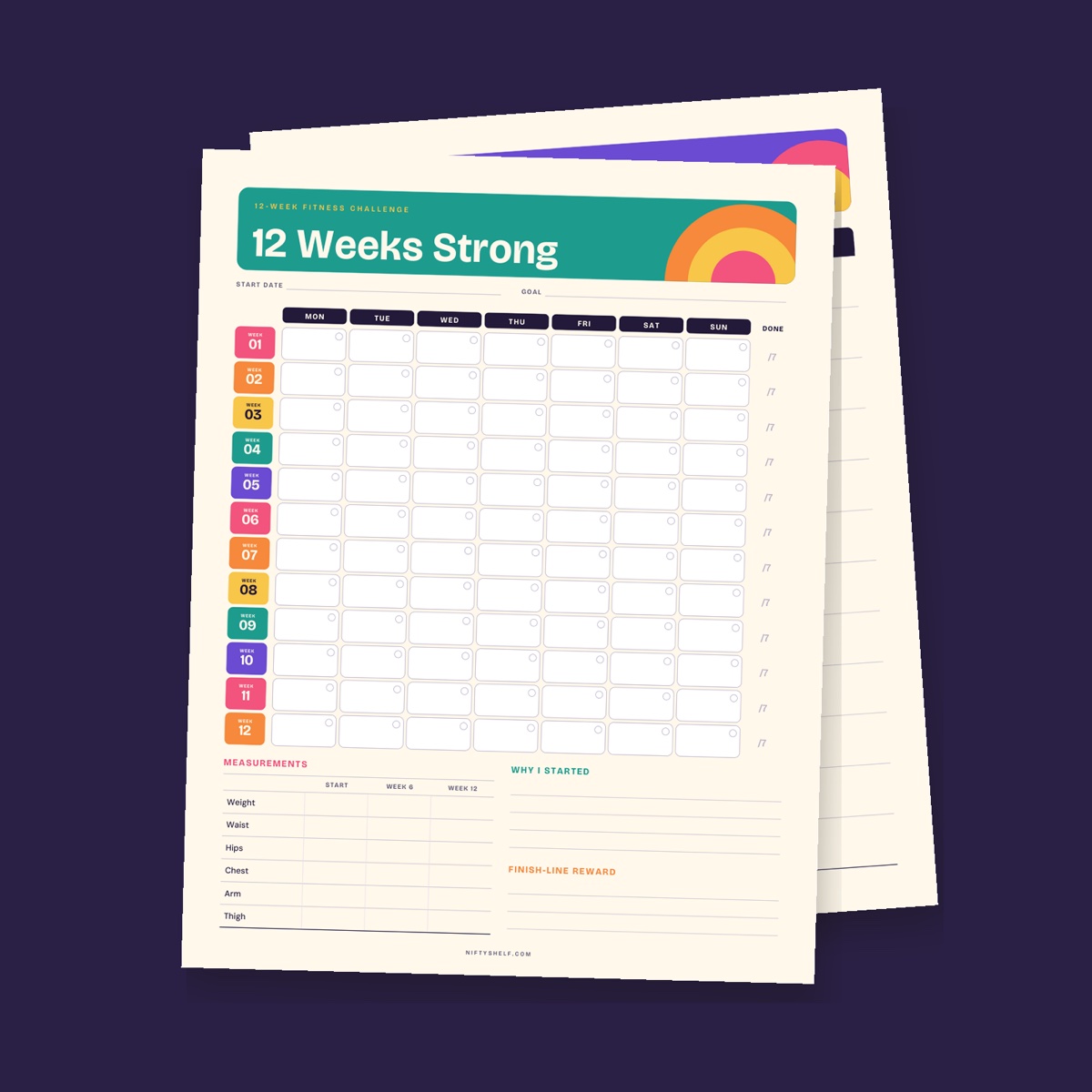
- 12 Weeks Strong: Workout Challenge Tracker: plan and tick each day for twelve weeks, record measurements at the start, week 6 and week 12, and do a weekly check-in.
- Monthly Water Tracker: fill in one drop per glass, up to eight a day, with a daily goal field and a reward line.
- The Reading Life: Reading Log & 52-Book Challenge: a bookshelf to fill in, one book at a time.
If you combine a habit sheet with a challenge sheet, Merge PDF puts them in one file so they print together. For focused reading or study habits, a calm playlist from our study music can double as the trigger: when the music starts, the habit starts. Our printable templates guide covers printing at the right size and other editing tips.
Common mistakes
- Tracking ten habits from day one and dropping all of them by day ten
- Habits without a number or trigger, so every tick turns into a debate
- Keeping the sheet in a notebook or drawer instead of where the habit happens
- Leaving missed days blank instead of marking them, which hides the pattern
- Throwing the tracker away after one bad week instead of resuming the next day
- Making the habit bigger the moment it starts going well, before it feels automatic
FAQ
How long does it take for a habit to stick?
There is no fixed number. You’ll often see “about two months” quoted as a rough estimate, but it varies a lot by person and habit. A simple test: when skipping it feels odder than doing it, it’s ready to move off the tracker.
Is a printable or a spreadsheet tracker better?
Whichever one you’ll see at your tick moment. Paper on the wall is hard to ignore, and ticking by hand feels satisfying. A spreadsheet suits you if you’re at a computer every evening: put habits in rows and days in columns, and add a column that counts the ticks. The rules in this guide apply to both.
What if I forget to tick for a few days?
Fill in what you honestly remember and mark the rest with a dash. Then move your tick moment to something you never skip, like brushing your teeth before bed, and keep the pen right there.