Most food waste starts at the store, not in the kitchen. You buy a bag of spinach for a recipe you never get to, a second jar of mustard because you couldn’t remember the first, and enough ground beef for three meals when the week only had room for one. A meal plan fixes that by deciding what you’ll eat before you decide what to buy.
This guide walks through a plan a family of three or four can keep up every week: a quick fridge check, theme nights so you’re not starting from zero, cooking once to eat twice, and a grocery list that follows the layout of the store. The whole routine takes about 20 minutes on a Sunday.
What you’ll need
- One weekly planner from our meal-plan templates (more on choosing below)
- A pen, and a magnet or clip for the fridge door
- Your phone camera, for a photo of the fridge and pantry
- 20 minutes once a week, plus five minutes once a month for the bigger picture
1. Shop your fridge before you plan
Open the fridge, the freezer and the cupboard and write down what needs using up: half a cabbage, four eggs, the last of a chicken, a tub of yogurt that expires Thursday. These go into the first two dinners of the week, before anything new is bought.
Then note the staples you already have plenty of, like rice, pasta, onions, oil and spices, so they don’t end up on the list again. A photo of each shelf takes ten seconds and settles the “do we still have soy sauce?” question in the aisle.
2. Give each night a theme
Deciding seven dinners from scratch every week is what makes people give up. Theme nights shrink the choice: instead of “what’s for dinner on Tuesday?” the question becomes “which tacos this week?”
A set that works for many families:
- Sunday: roast or slow-cooked dinner
- Monday: stir-fry or fried rice
- Tuesday: tacos or wraps
- Wednesday: pasta
- Thursday: soup and sandwiches
- Friday: homemade pizza
- Saturday: leftovers or “use it up” night
Swap any theme for one your household likes better. The point is a framework you can fill in quickly, not a fixed rule. Stuck on Saturday? Put five family favorites into Spin the Wheel and let it pick; the list stays saved in your browser for next week.
3. Cook once, eat twice
The single biggest time saver is planning a second meal from the first one. Roast a larger chicken on Sunday and Monday’s fried rice is half made. Cook double taco filling and you have Wednesday’s lunches. Make a big pot of soup and Friday lunch is done.
When you fill in the planner, draw a small arrow from the big-batch dinner to the meal it feeds. It’s a reminder at the stove to cook the extra, and it stops you buying ingredients for a meal that leftovers will cover.
4. A sample week for a family of four
Here’s a realistic week built from the themes above, assuming the fridge check turned up rice, pasta, onions, garlic and a few carrots.
| Day | Theme | Dinner | Makes extra for |
|---|---|---|---|
| Sun | Roast | Roast chicken, potatoes and carrots | Monday dinner |
| Mon | Stir-fry | Chicken fried rice with peas and peppers | Tuesday lunches |
| Tue | Tacos | Beef and black bean tacos, shredded lettuce | Wednesday lunches |
| Wed | Pasta | Tomato and spinach pasta, double the sauce | Friday pizza sauce |
| Thu | Soup | Red lentil and vegetable soup, toast | Friday lunches |
| Fri | Pizza | Flatbread pizzas with leftover sauce and veg | — |
| Sat | Use it up | Frittata with whatever vegetables are left | — |
Breakfasts stay simple and repeat: oats, toast, yogurt and fruit. Lunches come almost entirely from the “makes extra” column. That’s how one shop covers 21 meals without a cart full of separate ingredients for each.
5. Turn the plan into a grocery list by store section
Go through the plan one dinner at a time and write every ingredient you don’t already have. Then sort the list into the same sections as your store, so you walk each aisle once and don’t double back for the tortillas.
For the sample week, the list looks like this:
- Produce: 3 lb potatoes, 3 bell peppers, 1 bag spinach, 1 head lettuce, 4 tomatoes, 1 bunch celery, 2 limes, bananas, apples
- Meat & fish: 1 large whole chicken (about 5 lb), 1 lb ground beef
- Dairy & eggs: 12 eggs, 8 oz shredded cheese, 1 gallon milk, 1 large tub plain yogurt
- Bakery: 12 tortillas, 4 flatbreads, 1 loaf sandwich bread
- Pantry: 2 large cans crushed tomatoes, 2 cans black beans, 1 lb red lentils, 1 carton stock
- Frozen: 1 bag peas
Notice what’s missing: no rice, pasta, onions or garlic, because the fridge check found them. That’s where the savings come from.
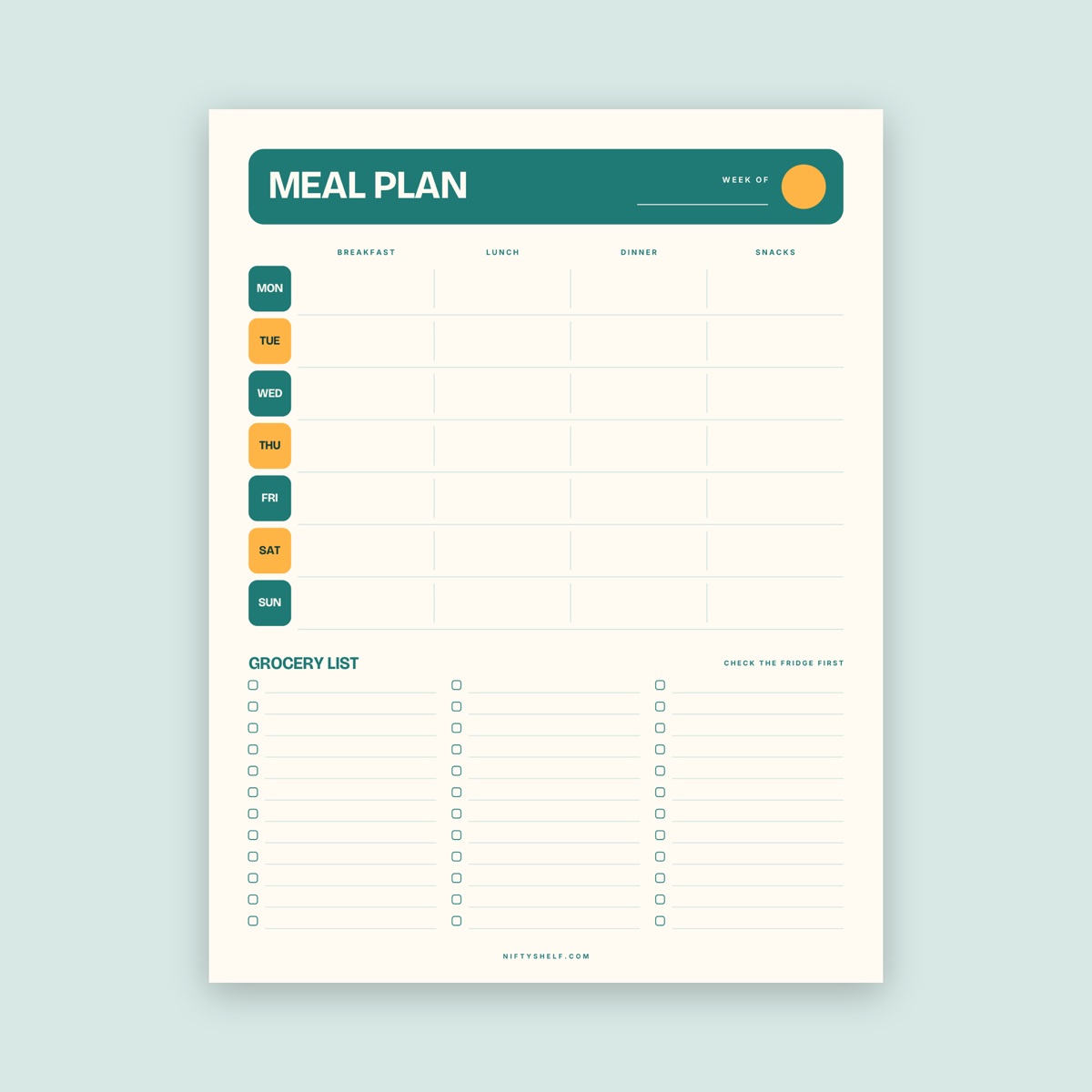
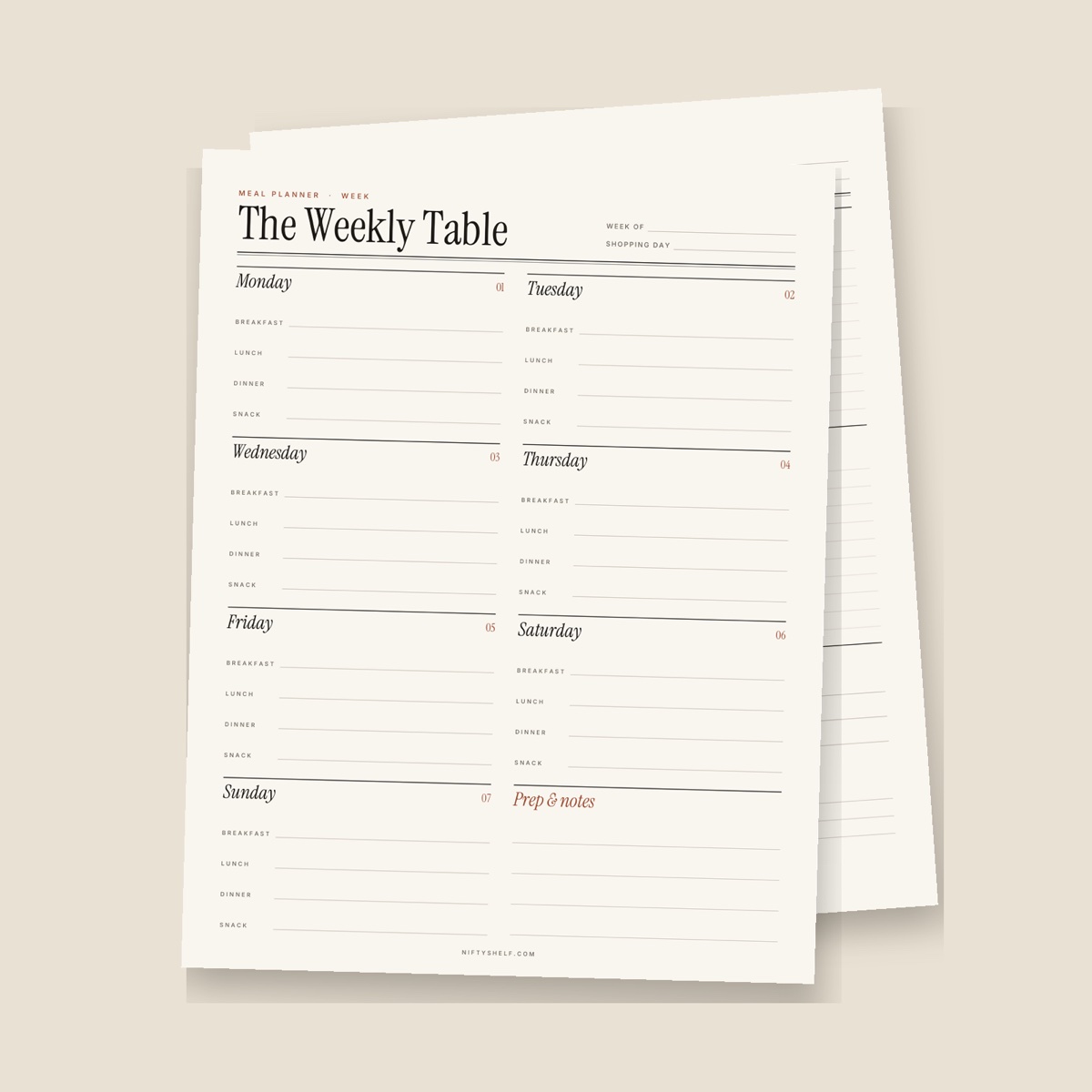
Our templates handle this step in different ways. The Weekly Meal Plan + Grocery List puts a 7-day grid (breakfast, lunch, dinner, snacks) and a three-column checklist on one page, so plan and list can’t get separated. The Weekly Table uses two pages: the week on one, and a list already sorted into eight aisles (produce, dairy, meat & fish, bakery, pantry, frozen, snacks, household) on the other, with a budget box for estimated, spent and saved. The Cozy Weekly Meal Planner fits everything on one pastel page with meal-prep notes and a budget line. If you already have a planner and only want the list, Grocery List by Category has 10 store sections, 60 checkboxes and a blank-category version for stores with an unusual layout.
6. The Sunday 20-minute routine
Set a 20-minute countdown on the Online Stopwatch so planning doesn’t spread across the afternoon.
- Minutes 0–5: check the fridge, freezer and last week’s sheet. Circle anything that must be used first.
- Minutes 5–10: fill the dinners using your theme nights, starting with the use-it-up items. Add the arrows for cook-once-eat-twice.
- Minutes 10–15: write the grocery list by section and cross off what you already have.
- Minutes 15–20: write an estimated total in the budget box and jot two or three prep tasks, like cooking a double batch of rice or washing the lettuce.
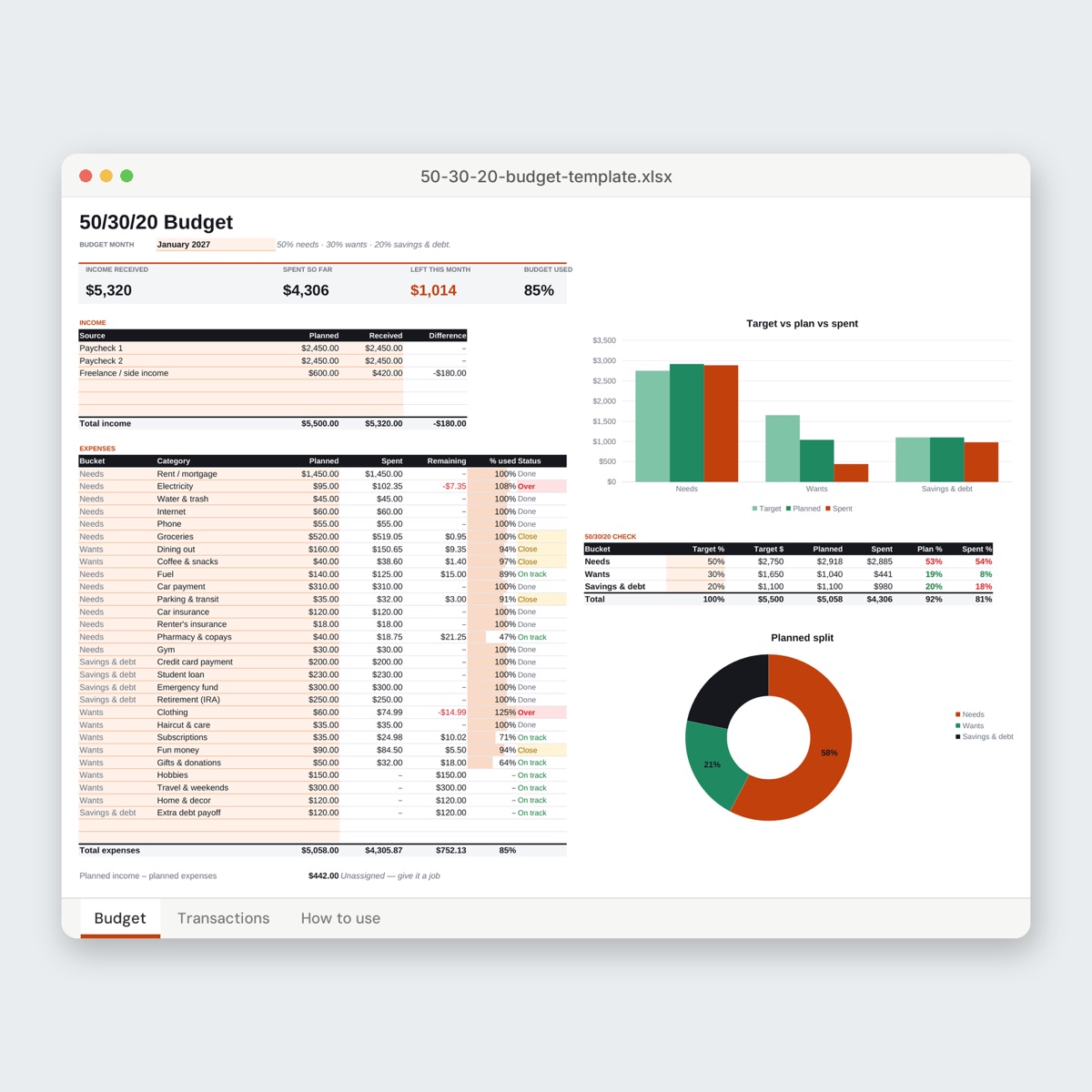
After shopping, write what you actually spent next to the estimate. If you spent $132 this week against $150 last week, Percentage Calculator shows that’s a 12% drop. Copying the weekly total into the groceries line of a budget template such as the Monthly Budget Template — Modern shows how the month is tracking.
7. Make leftovers part of the plan
Leftovers only save money if someone eats them. A few habits help:
- Keep one fridge shelf as the “eat first” shelf and put every container there.
- Write the date on a piece of masking tape on each box.
- Cooked leftovers are generally best eaten within three or four days; freeze portions you won’t get to by then.
- Keep Saturday as use-it-up night, so the last odds and ends have a home before the next shop.
8. Zoom out with a monthly meal calendar
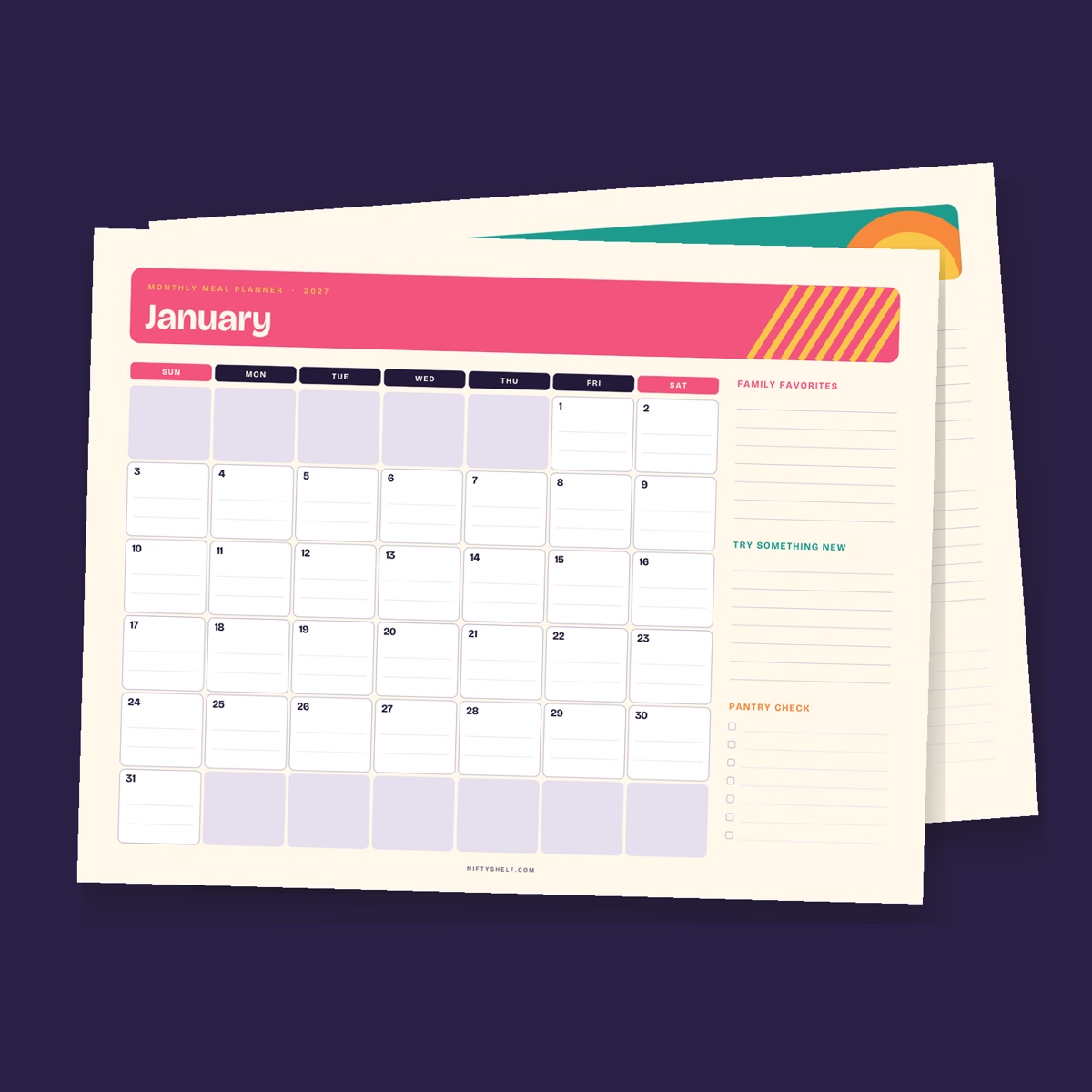
Once a few weekly plans have worked, a monthly view saves even more decisions. The 2027 Monthly Meal Planner has 12 dated months starting on Sunday, an undated month you can reuse, and a sidebar for family favorites, try-something-new ideas and a pantry check. Fill the favorites list first, place those meals on your busiest weeknights and save new recipes for weekends.
Its 13 pages don’t all need printing at once. Use Split PDF to pull out just next month, and Grayscale PDF if you’d rather not spend color ink. To type your theme nights onto the undated month before printing, open it in Edit PDF. You can also combine a month page with four copies of a weekly planner in Merge PDF and print the whole month as one pack. If a family member keeps a handwritten list on the fridge, a photo run through Image to Text gives you text you can paste into a shared note.
If you film your cooking, a light track such as Kitchen Adventure or Manhã de Domingo works well under a “Sunday prep” video, and there are more in cooking music.
Common mistakes
- Planning before checking the fridge, so the week’s list repeats what’s already at home
- Planning seven brand-new recipes, which is tiring and needs seven sets of ingredients
- Forgetting busy nights: a 45-minute recipe on the evening of a late practice turns into takeout
- Writing the list in plan order instead of store order, and zigzagging through the aisles
- No room for leftovers, so the fridge fills up and food gets thrown out before the next shop
- Setting the budget after shopping instead of before
FAQ
How much can a meal plan save?
It depends on how you shop now. The savings mainly come from buying only what the plan needs, using what’s already at home and replacing a takeout night or two. Writing estimated and actual totals each week shows you your own number within a month.
Should I plan breakfasts and lunches too?
Start with dinners, since they drive most of the shopping. Keep breakfasts on a short repeating rotation and let leftovers cover lunches. Add more detail once dinners feel routine.
What if plans change mid-week?
Swap days rather than skipping meals. Move a quick dinner forward and push the longer one back. Anything with a short shelf life, like fish or salad, goes early in the week so it can still move.
Can I reuse the printable planners?
Yes. Slip the page into a sheet protector and write with a dry-erase marker, or keep a stack of copies. The Weekly Meal Plan + Grocery List and Grocery List by Category also come with print-friendly versions that use less ink.